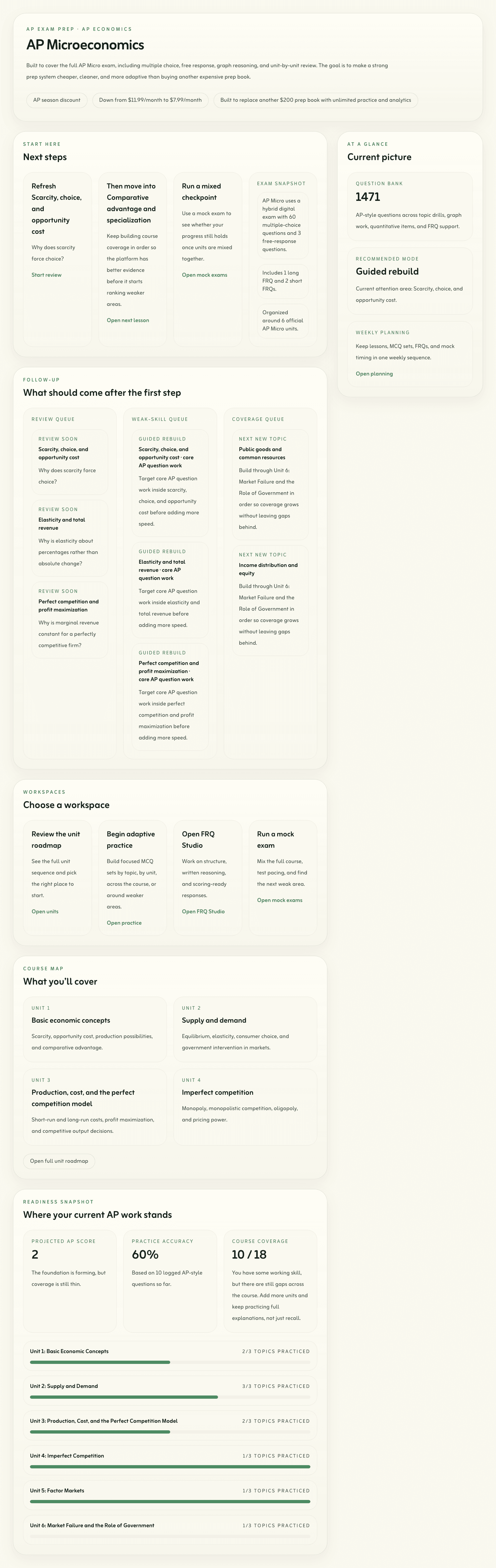
Course overview
See the course structure, your current priorities, and the main study tools in one place.
AP exam prep
AP Statistics in one study flow: lessons, targeted question work, FRQs, mock exams, and review support. The goal is to keep lessons, practice, written work, mock exams, and review moving inside one focused study rhythm instead of scattering them across disconnected resources.
See the course structure, your current priorities, and the main study tools in one place.
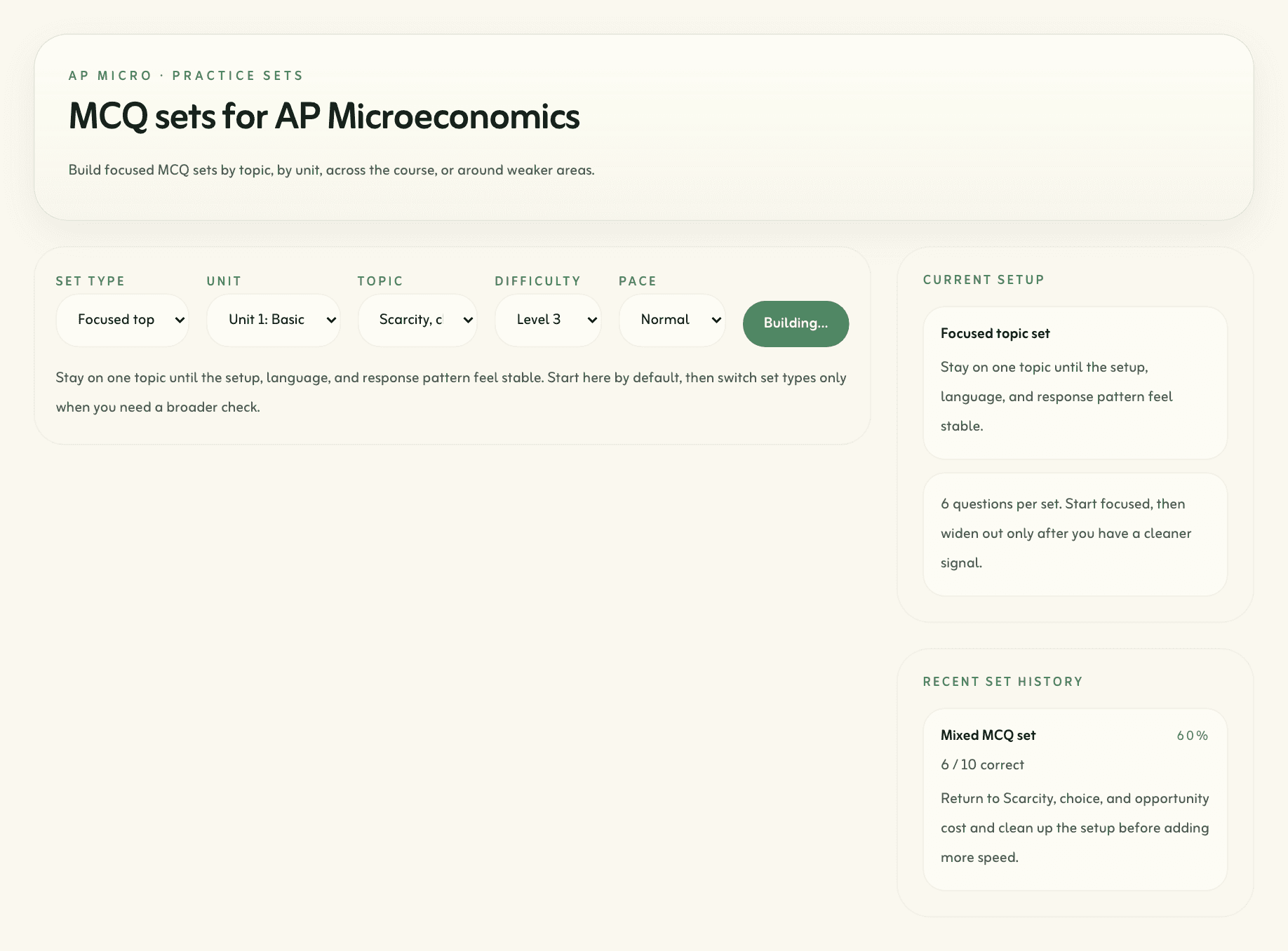
Keep question work focused around the exact topic, graph, quantitative setup, or explanation skill that still needs reinforcement.
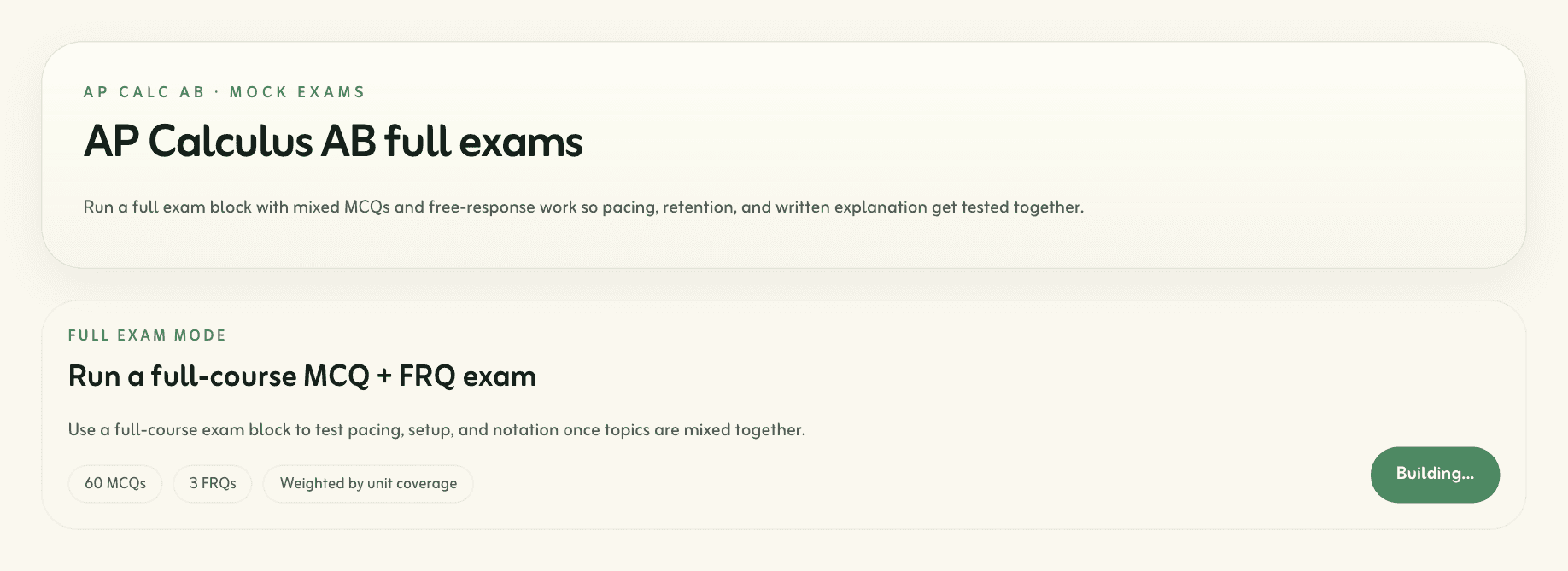
Bring the work back together through FRQs, mocks, or the broader course view so progress feels connected instead of scattered.
Why this path is worth the time
How the prep flow works
Course coverage
Built for students who need stronger statistical reasoning, sampling and inference language, and repeated work with data, distributions, and conclusions.
Displays, summaries, and distributions.
Association, regression, and residuals.
Sampling, experiments, and bias.
Probability rules and expected value.
Sampling variability and model conditions.
Proportions, confidence intervals, and tests.
Means, t-procedures, and comparison work.
Slope, regression, and association claims.
Goodness-of-fit, independence, and exam integration.
Fintellect AI
Create your account, or log in if you already have one.