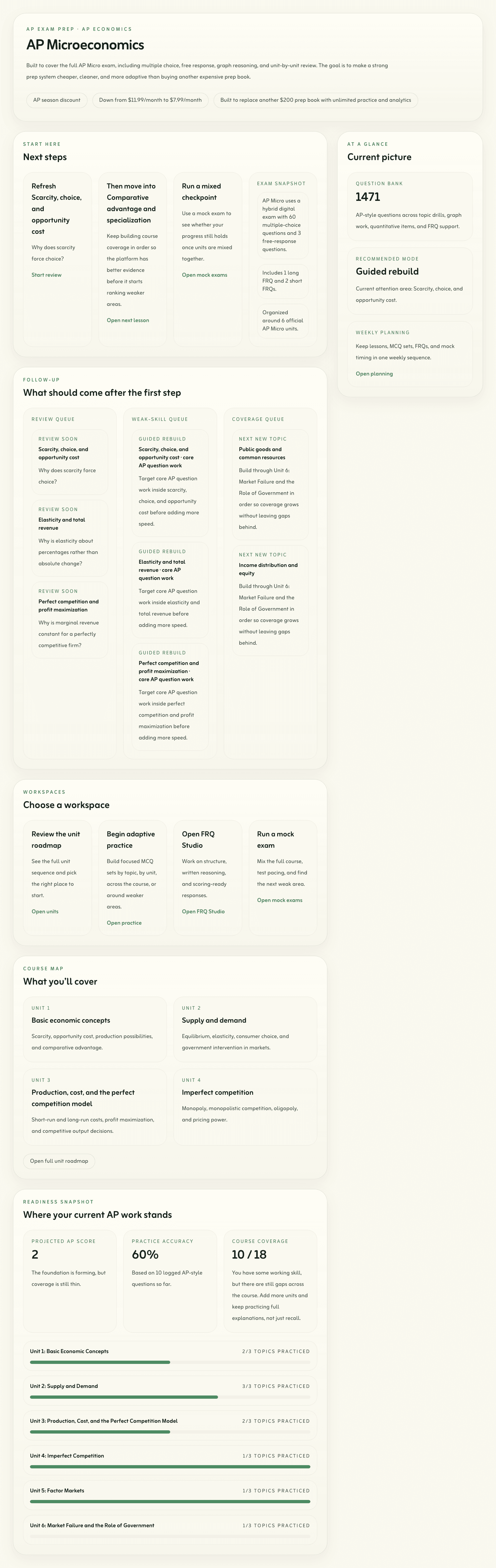
Course overview
See the course structure, your current priorities, and the main study tools in one place.
AP exam prep
Get one place to study AP Micro with guided units, unlimited practice, FRQ prep, mock exams, analytics, and AI support. The goal is to keep lessons, practice, written work, mock exams, and review moving inside one focused study rhythm instead of scattering them across disconnected resources.
See the course structure, your current priorities, and the main study tools in one place.
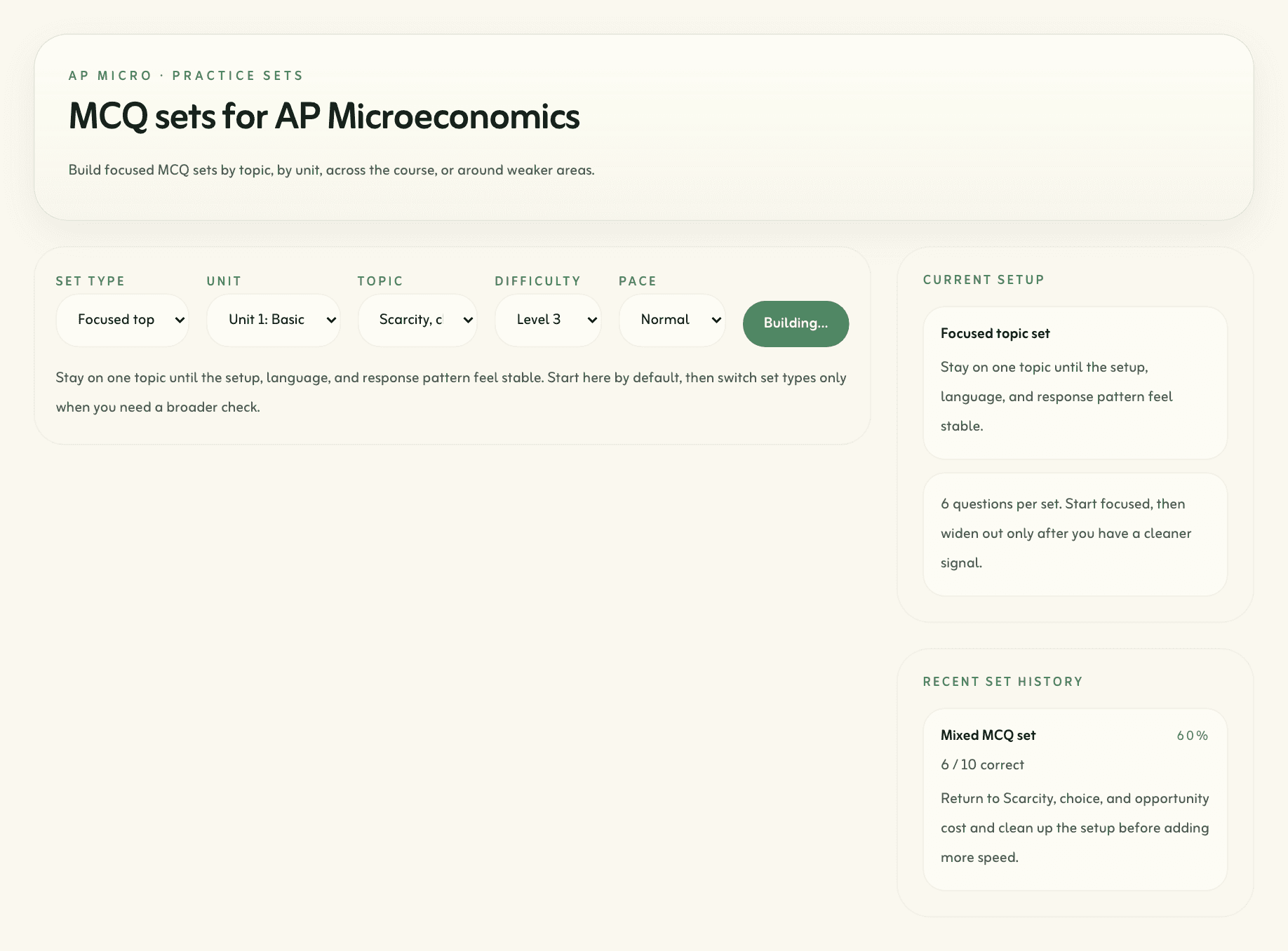
Keep question work focused around the exact topic, graph, quantitative setup, or explanation skill that still needs reinforcement.
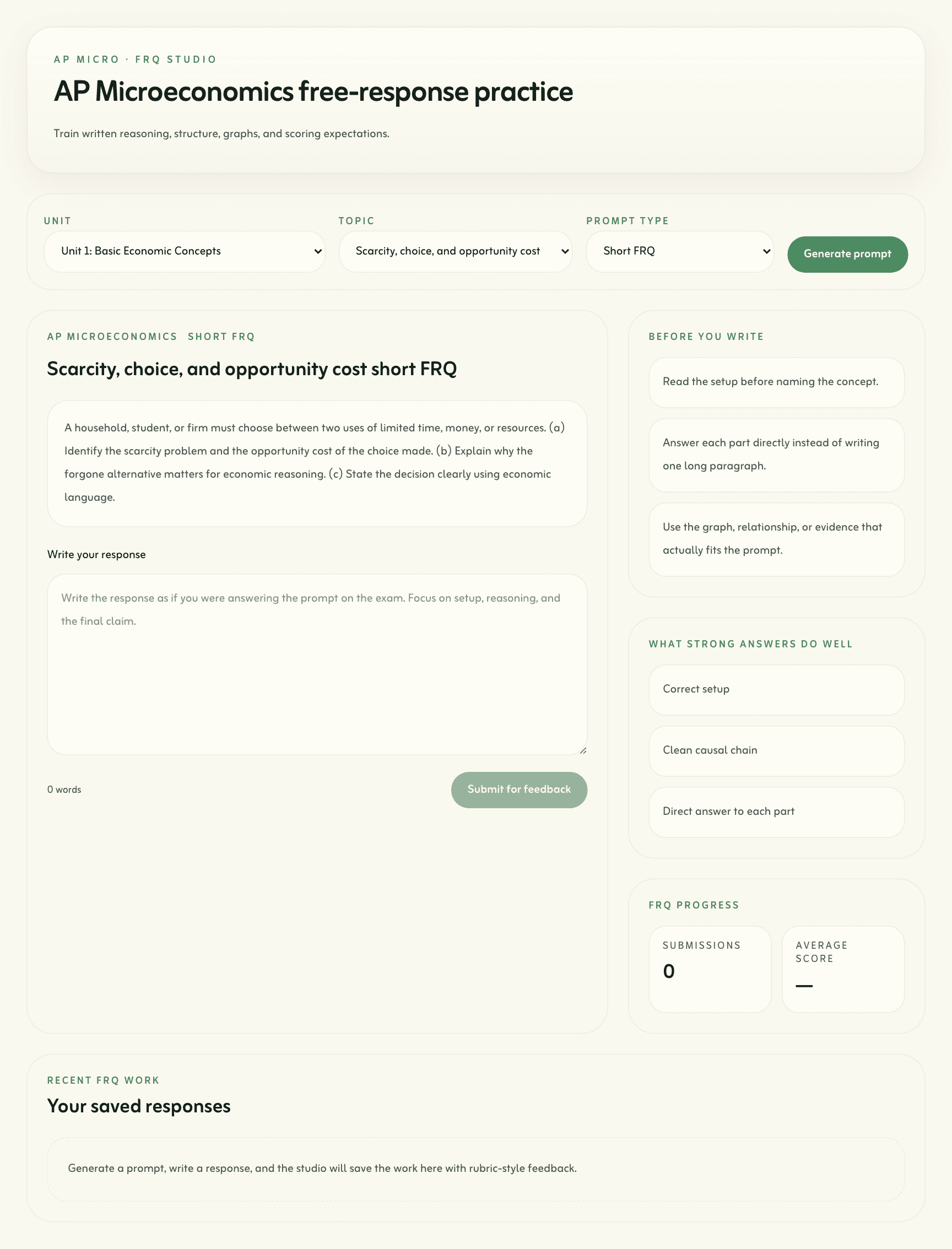
Bring the work back together through FRQs, mocks, or the broader course view so progress feels connected instead of scattered.
Why this path is worth the time
How the prep flow works
Course coverage
Built to cover the full AP Micro exam, including multiple choice, free response, graph reasoning, and unit-by-unit review. The goal is to make a strong prep system cheaper, cleaner, and more adaptive than buying another expensive prep book.
Scarcity, opportunity cost, production possibilities, and comparative advantage.
Equilibrium, elasticity, consumer choice, and government intervention in markets.
Short-run and long-run costs, profit maximization, and competitive output decisions.
Monopoly, monopolistic competition, oligopoly, and pricing power.
Labor and resource markets, derived demand, and wage determination.
Externalities, public goods, common resources, and policy responses.
Fintellect AI
Create your account, or log in if you already have one.